
– Adhvai Deepak Menon
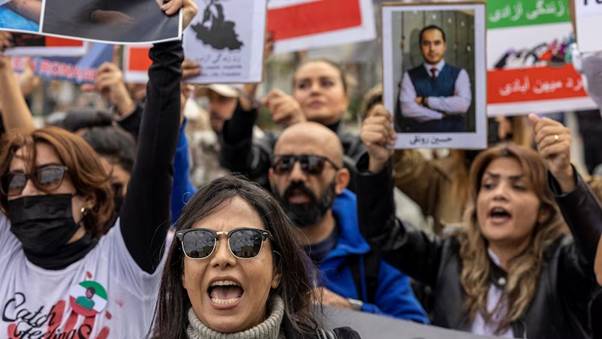
Imagine iron hands clenching onto you tightly and you try, vainly, to wrench out of its clasp. This is the wicked situation many Iranian women are shepherded into, just for not wearing their sacred hijabs on the hot, dusty streets of modern-day Iran. They are dragged brutally across streets like wheelbarrows; locked in jails like animals; beaten blue until they looked like an avatar of Vishnu. Pause. Let’s rewind a bit. In the early 1900s, before and during the reign of Shah Muhammad Reza, the Iranian people had their own will at their disposal and could dress as they pleased. A turn of tables. The Islamic Revolution tightened its screws, people thronged the streets, and the sly fox of a monarch, Muhammad, fled his country (or as some accounts say, was exiled).
What followed in its wake, was the creation of a theocratic government that held the reins of the new nation. Conservatives, now at the head, stressed the wearing of a hijab. And it was quickly made into a law, making it obligatory, in 1983. As years passed, countries around Iran’s radar twisted religion to suit the practical needs of people. Multiple Iranian women loved the prospect, the idea of practicality thwarting tradition. The government, however, went beetroot livid. How? How could one boycott one’s faith in the name of ‘modern practices’? They firmly dealt with such women, committing atrocities against them, and violent acts of suppression.
One such act, the spark that set the entire Iran ablaze, was that of Masa Mani. A young girl, Masa Mani was caught with strands of hair peeking out from nooks in her hijab. Police personnel, instead of providing her with assistance, provided her with the gift of death. They beat her then and there on the streets, beating her into a week-long coma followed by death. Iranian women, furious, spilled out into the streets. Men and women, women with hijabs and those without, thronged the streets to counter the government’s impractical laws and fighting for a freedom of opinion. Funny to think that while Iran fights to have their hijabs removed, in Karnataka (India), women are fighting against a government law prohibiting hijabs in exam halls. Many aren’t allowed to write exams with these sacred garments on.
All of these incidents remind us about one thing only, religion is a very sensitive matter. We cannot impose it upon people, and nor can we take it away from them. And such is the situation in Iran.
What followed in its wake, was the creation of a theocratic government that held the reins of the new nation. Conservatives, now at the head, stressed the wearing of a hijab. And it was quickly made into a law, making it obligatory, in 1983. As years passed, countries around Iran’s radar twisted religion to suit the practical needs of people. Multiple Iranian women loved the prospect, the idea of practicality thwarting tradition. The government, however, went beetroot livid. How? How could one boycott one’s faith in the name of ‘modern practices’? They firmly dealt with such women, committing atrocities against them, and violent acts of suppression.
One such act, the spark that set the entire Iran ablaze, was that of Masa Mani. A young girl, Masa Mani was caught with strands of hair peeking out from nooks in her hijab. Police personnel, instead of providing her with assistance, provided her with the gift of death. They beat her then and there on the streets, beating her into a week-long coma followed by death. Iranian women, furious, spilled out into the streets. Men and women, women with hijabs and those without, thronged the streets to counter the government’s impractical laws and fighting for a freedom of opinion. Funny to think that while Iran fights to have their hijabs removed, in Karnataka (India), women are fighting against a government law prohibiting hijabs in exam halls. Many aren’t allowed to write exams with these sacred garments on.
All of these incidents remind us about one thing only, religion is a very sensitive matter. We cannot impose it upon people, and nor can we take it away from them. And such is the situation in Iran.
 The Echo