
-MS Meenakshi
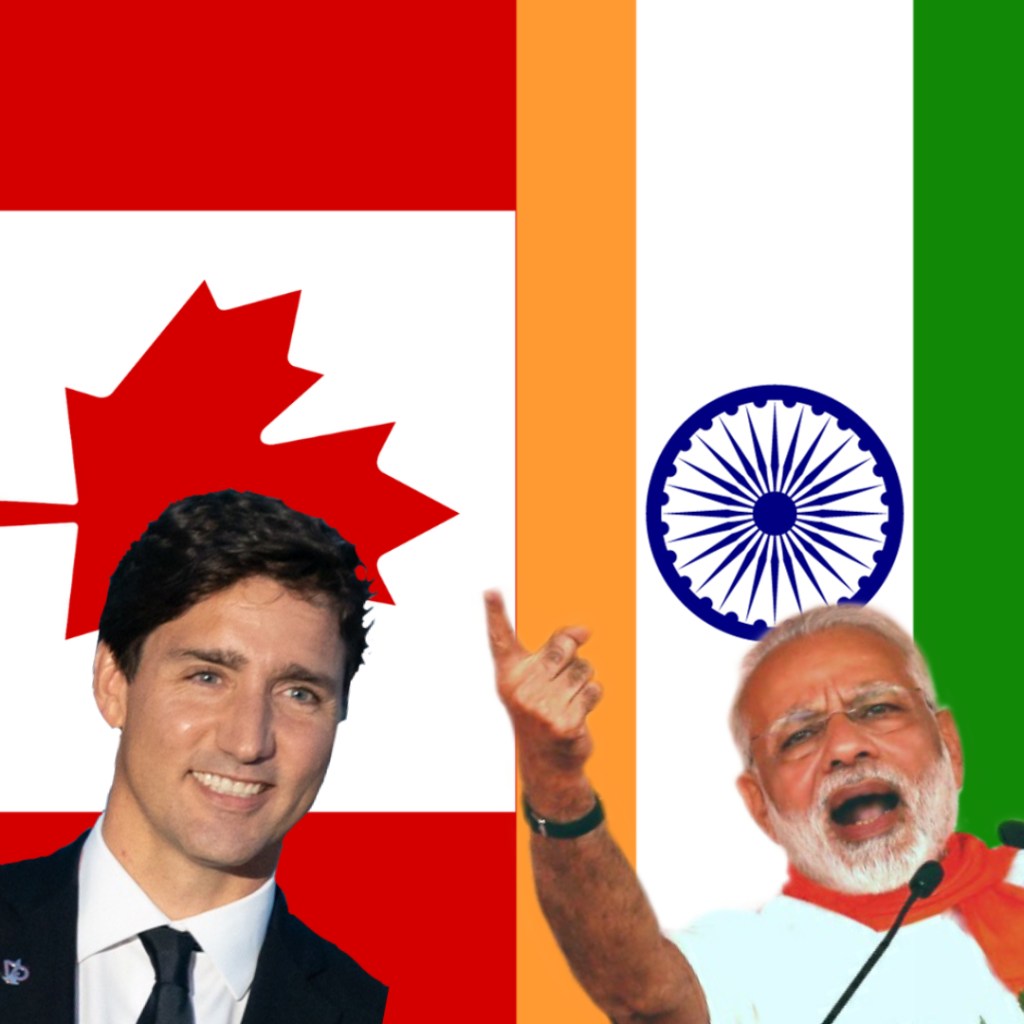
Perhaps one of the most random happenings of late is the terrific row between India and Canada, two countries which have so far had cordial relations.
Now, where did such a problem begin?
It all began with a man called Hardeep Singh Nijjar, a Sikh independence activist (a separatist, as people call him), who was an active supporter of Khalistanism and the Khalistan movement.
Amidst the tensions between Hindus and Muslims in the partition of 1947, and the years that followed the Sikh community began to slowly call for an independent, Punjabi speaking, autonomous Sikh state. In 1966, the state of Punjab was created with Chandigarh as its capital. However, like a sleeping dragon, the movement was awakened from its slumber once more in the 1970‘s and 1980’s under the influence of the rebellious Sikh leader- Jarnail Singh Bhindranwale. And of course, this is where it all went downhill.
Bhindranwale and his supporters had begun to terrorise the Hindus, and soon, this once peaceful protest was turned into an armed rebellion where heinous crimes were committed against innocent bystanders. A lot more unpleasantness followed, with Indira Gandhi taking questionable action and later being assassinated for it. A year later, Canadian-based Sikh figures were found to have orchestrated an attack upon an AirIndia plane, killing everyone on board.
Which brings us back to the current year. Although it has remained somewhat dormant over the last few years, the Khalistan movement is still present in today’s society, not just in India, but in Canada, the United Kingdom, the United States, and Australia.
On June 18, 2023, Hardeep Singh Nijjar was shot outside a Gurudwara in Surrey, a Vancouver suburb with a large Sikh population, three years after India had designated him a “terrorist”. So, naturally, the Canadian Prime Minister, Justin Trudeau , blames the Indian government for being behind this, and calls upon Canada’s allies to aid them. A statement released by the Indian Government says- “Allegations of the government of India’s involvement in any act of violence in Canada are absurd and motivated.”, which clarifies India’s rejective stance on the matter.
Further, foreign affairs minister S Jaishankar stated that political convenience should not determine responses to “terrorism, extremism and violence”, in the United Nations General Assembly. He also called out Canada for supporting the pro-Khalistan elements and thus extending support towards those who wish for an independent state in India.
Meanwhile, India’s declaration of suspending Visa processing in Canada has only escalated this row. Arindam Bagchi, a spokesperson for India’s foreign ministry, firmly says at a media briefing- “You are aware of the security threats being faced by our consulates in Canada. This has disrupted their normal functioning. Accordingly our high commission and consulate are temporarily unable to process visa applications. We will be reviewing the situation on a regular basis.”
Both countries have also suspended trade relations, which could prove to be fatal to economic development in the future.
 The Echo