
-Aanya Menon
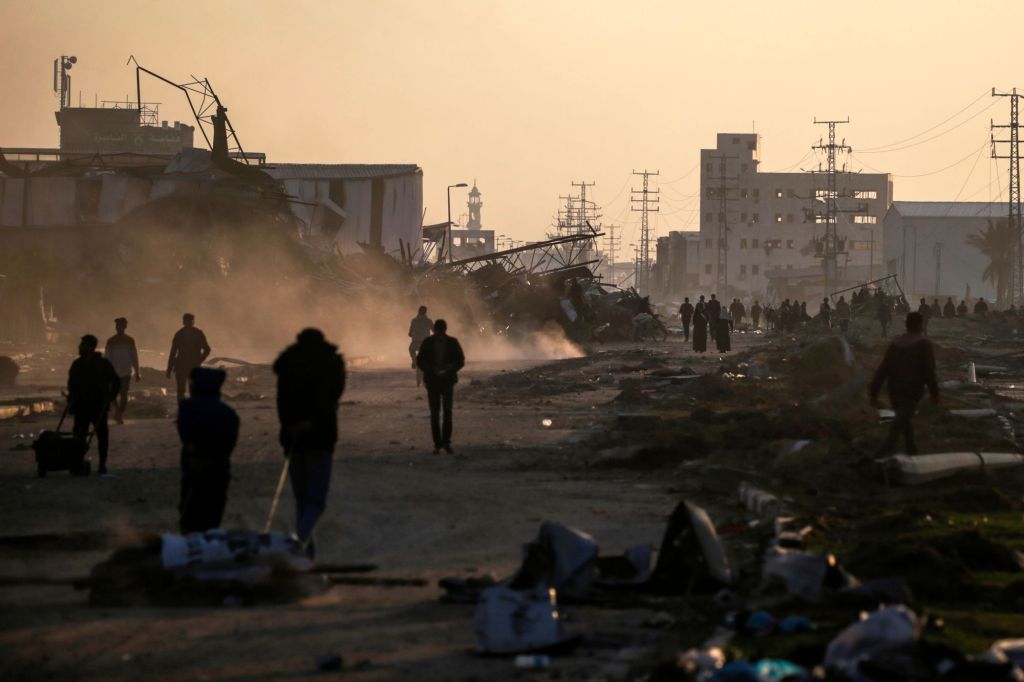
Israel – Palestine. The conflict that has been going on since 1948. After 75 years, six wars and two uprisings there has still been no progress. On 7th October 2023, Hamas launched a large-scale attack on Israel.This attack is one of the deadliest attacks on Israel in the last 50 years. Israel has declared war for the first time since 1973. Yet another war that could disrupt the world economy because it involves some of the most powerful parties in the world.
In the 16 years of Hamas occupying the Gaza strip, the area has been under an economic blockade from Egypt and Israel. The area faces a severe 50 percent unemployment rate, more than half the population lives in poverty and 53% of the population is facing a food crisis. Gaza receives just 12 hours of power a day and due to the conflict Israel has cut off electricity again. This makes it evident that Hamas has no money to run and sustain itself.
How does Hamas get the money to run such large-scale operations then?
Turns out the country funding Hamas is none other than Iran. According to the Israeli defence minister Iran sends about 100 million dollars annually to Hamas along with weapons for training. Iran has also donated a total of 70 million dollars to help develop missiles and defence systems.
Why is Iran funding Hamas and why is it waging a proxy war with Israel?
At the heart of the Middle East Cold War lies the age-old religious divide between Shia-dominated Iran and Sunni-dominated Saudi Arabia.Surprisingly, Iran was the second major Arab Islamic country to recognize Israel in 1950 under the leadership of Shah Muhammad Reza Pahlavi, who maintained a pro-West stance. However, the Iranian revolution in 1979 saw Ayatollah Khomeini’s rise to power, leading to a shift in policy. Iran turned against Israel, aligning itself with anti-Israel groups like Hamas. The relationship between Saudi Arabia and Hamas has seen fluctuations, marked by periods of warmth and discord. Hamas enjoyed positive ties with Saudi Arabia in the 1980s. However, the establishment of ties between Hamas and Iran strained relations with Saudi Arabia.The recent eruption of violence between Israel and Hamas has thrown a wrench into the peace talks between Saudi Arabia and Israel. The Abraham Accords signed by (Israel, UAE and Bahrain), a groundbreaking peace deal in 2020, signalled a positive shift in the Middle East. However, the recent conflict has prompted Saudi Arabia to emphasise its support for the Palestinians, jeopardising the prospect of normalisation with Israel. So in a way, Iran has actually succeeded in derailing these peace talks.
Repercussions for the Economy
- Oil Shock
In October 1973 a similar attack on Israel occurred which was supported by the Arab Nations. The United States supplied arms and funding to Israel, thus angering the Arabs leading to oil prices quadrupling and causing a recession all over the world. Just like the Russia Ukraine War, this could cause inflation and hamper the world economy.
- Port Trade
India’s trade with Israel stands at 10.7 billion dollars as of FY 23. This trade may be seriously hampered if operations at these three ports of Israel are impacted.

These ports handle shipments and agricultural products, chemicals, electronics, machinery and vehicles.
So far there are no reports of any port disruption ,However, it’s crucial for stakeholders to remain vigilant, as any potential impact on the operations of these ports could pose challenges.
- India Middle East Europe Economic Corridor
The India-Middle East-Europe Economic Corridor was unveiled during the G20 Summit in New Delhi, marking a significant step towards enhancing economic connectivity. The ambitious plan outlined two primary routes: the Eastern Corridor, bridging India to the Arabian Gulf, and the Northern Corridor, linking the Arabian Gulf to Europe. An integral component of this initiative was the establishment of a railway network aimed at fostering cross-border ship-to-rail transit among key players such as India, UAE, Saudi Arabia, Jordan, Israel, and Europe. However, the current geopolitical conflict threatens to cast a shadow over these promising plans, introducing uncertainties and potential delays, if not outright cancellations.

- There exists a possibility that the current conflict could escalate, impacting crucial trade routes through the strategically vital Strait of Hormuz. The Strait of Hormuz is a narrow waterway located at Iran’s southern border, adjacent to the UAE and Saudi Arabia. Its significance lies in the fact that 37% of Seaborne oil exports traverse this region, making it indispensable to the world economy. Tensions in the area have historically prompted Iran to threaten blocking the strait, potentially causing a worldwide oil crisis. Reports suggest that Iran holds substantial influence over this critical maritime passage, possessing the capability to wage asymmetric warfare against larger naval forces. While speculative, this scenario presents a tangible risk to the global economy.
While the Israel Hamas conflict will continue in the near future, its effects are not perspicuous. There may be no serious effects on the world economy at all or it could explode into a full blown catastrophe akin to the second intifada. It all depends on the moves made by these key players in this elaborate game. However, we must remain cautious and navigate challenging times with prudence and perspective.
 The Echo