
-Anjani Tammana
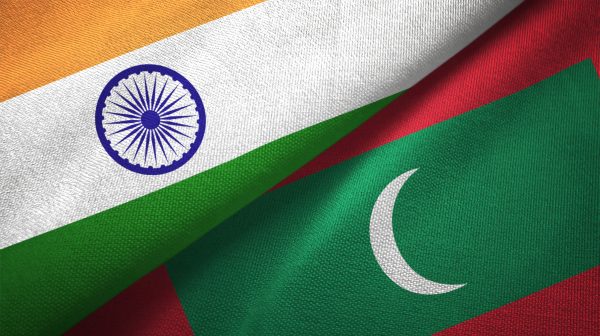
At this point, everyone is aware of the power of social media. When celebrities promote a brand or a location, sales skyrocket beyond imagination. Prime Minister Narendra Modi’s visit to the Lakshadweep islands is the most recent example of this phenomenon.
At the start of January, PM Modi visited the Lakshadweep islands for his ongoing tour of South India and uploaded pictures of them to social media on January 4th. The PM had explored the beautiful island’s beaches and heritage sites. Soon after, the people were clamouring to visit the Lakshadweep islands and see what the PM had been advertising for themselves. As a result, MakeMyTrip registered a 3400% increase in searches for Lakshadweep. However, not all were happy with the PM’s actions.
Among the disparaged include Mariyam Shiuna, Malsha Shareef, and Mahzoom Majid, three deputy ministers in Maldives’ Ministry of Youth Affairs. What was meant to be an attempt by the Prime Minister to promote local tourism was taken as an attack against the Maldives. The ministers took to X (formerly known as Twitter) to express their discontent. Shiuna called the PM a “clown” and a “puppet of Israel” in her post. The comment was both unwarranted and false, as India has sent humanitarian aid to Palestine multiple times since the war started and actively advocated for a two-state solution. Her co-workers, Shareef and Majid, jumped on the bandwagon and assumed that the PM had posted the images to challenge Maldives’ tourism. Zahid Rameez, a council member, explicitly stated that Lakshadweep could never measure up to the Maldives. “The move is great. However, the idea of competing with us is delusional. How can they provide the service we offer? How can they be so clean? The permanent smell in the rooms will be the biggest downfall,” he wrote on X.
To no one’s surprise, the citizens of India were enraged at this series of events. In addition to promoting tourism in Lakshadweep even more, the people were also calling for a boycott of Maldives. #BoycottMaldives was trending on all social media platforms. Many celebrities like PV Sindhu, Akshay Kumar, Pooja Hegde and Varun Dhawan promoted Lakshadweep and encouraged people to visit the islands for their next beach trip. EaseMyTrip cancelled all flights to Maldives to support the BoycottMaldives movement. The Indian Chamber of Commerce, one of the oldest trade associations in the country, issued an “appeal to boycott Maldives”. Subhash Goyal, head of ICC’s aviation and tourism committee, asked to “stop promoting Maldives in view of the anti-India feeling expressed by the ministers of Maldives” and to “divert all such queries to Lakshadweep and Andaman & Nicobar Islands, which are even better than Maldives in many ways”.
In the midst of all the chaos, the Maldivian government was scrambling to do damage control. The government suspended the three ministers for their words and issued the following statement: “The Government of Maldives is aware of derogatory remarks on social media platforms against foreign leaders and high-ranking officials. Their opinions are personal and do not represent the views of the Government of Maldives…Moreover, the relevant authorities of the Government will not hesitate to take action against those who make such derogatory remarks.”
What does a boycott of Maldives mean for the country? One-third of the Maldivian economy depends on tourism, and India is the country’s top source of tourists for the country. In 2023, over two lakh Indians visited the Maldives. On average, travellers stay in the country for 4-5 nights and spend ₹2.07 lakh to ₹4.14 lakh per night. While the exact loss to the Maldivian economy is hard to estimate, Ankit Chaturvedi, vice president and global head of marketing at travel software company Rategain, said that Indian tourists contributed $380 million, or ₹3152 crore, to the Maldivian economy. The amount is a significant contribution whose reduction can have severe repercussions on the Maldivian economy. Surprisingly, despite India ranking high in Maldivian tourism, Maldives doesn’t even make the top ten tourist destinations Indians prefer for 2022.
While it’s still unclear if the Maldives boycott will persist throughout the years or die out as any social media trend would, the attention it brought to local tourism will remain for many years to come. The series of events that unfolded over the two weeks is a testament to the power of social media and the patriotism of Indians.
 The Echo